Thermochemical Reactor Energy Storage System
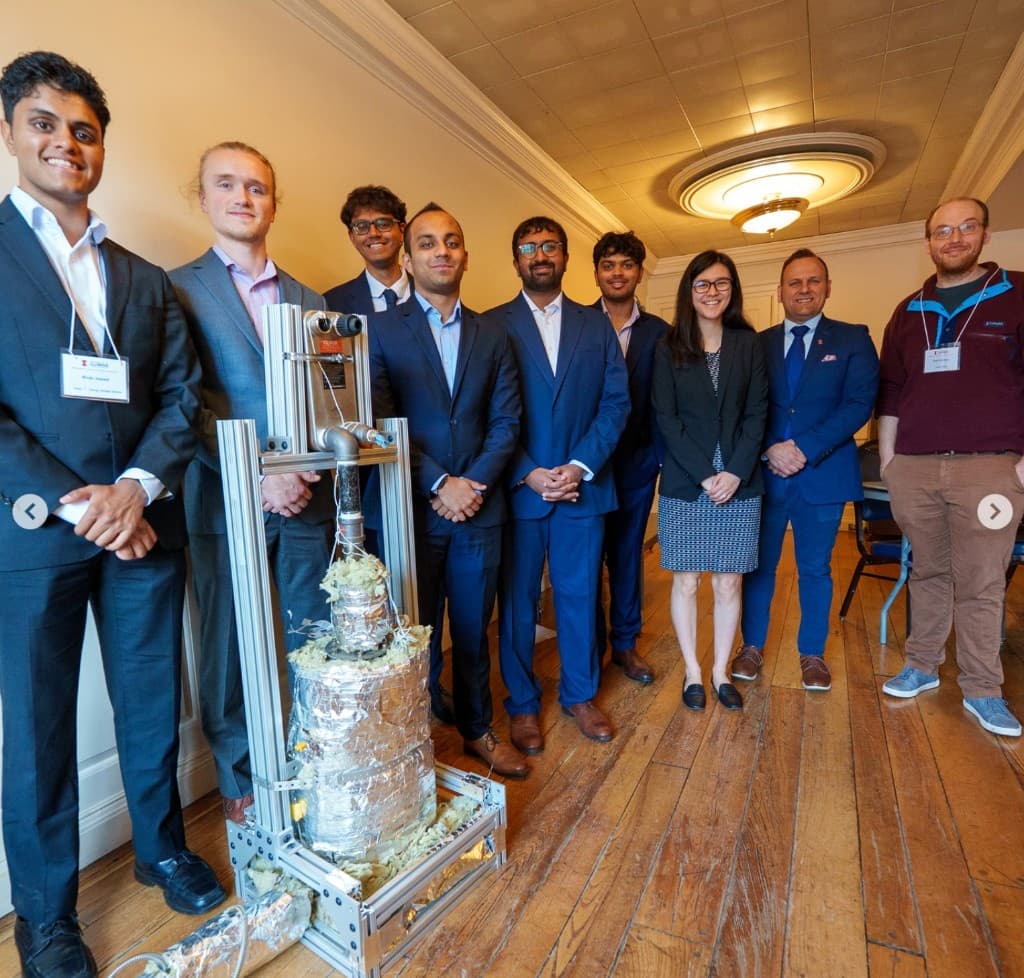
This project was developed as a part of my undergraduate senior design class (ME 470) with my team members Bhavin Patel, Finnley Ryan, Rahul Sridharan, and Vihaan Patel. Our team designed and prototyped a 5 kW thermochecmical reactor for Cache Energy's calcium hydroxide pellets, with inline air heating and a COMSOL multiphysics simulation.
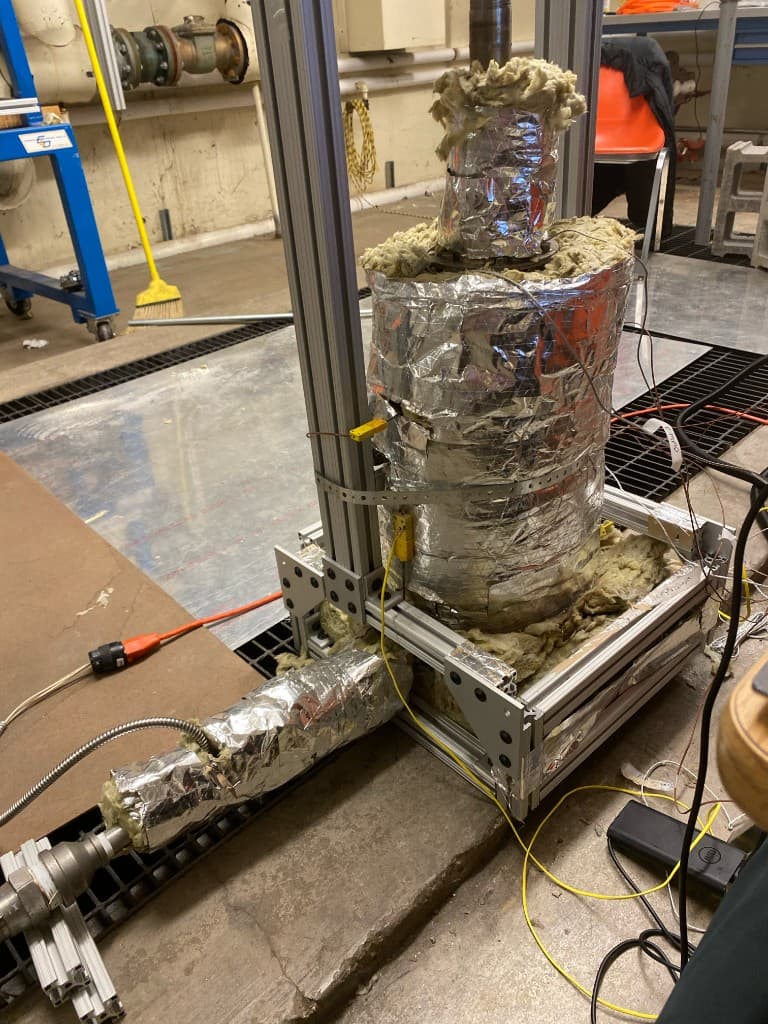
Cache Energy sponsored our senior design project after experiencing reliability and performance issues with their current heating mechanism. They tasked our team with building and simulating a thermochemical reactor that uses inline air heating to charge their novel calcium hydroxide pellets. A key deliverable was developing a high-fidelity simulation to evaluate scalability to 100 kW.
Our team centered the design and testing around four priorities: uniform heat distribution, system efficiency, cost-effectiveness, and scalability. In alignment with Cache Energy's core values, we maintained a focus on minimizing costs throughout the development process.
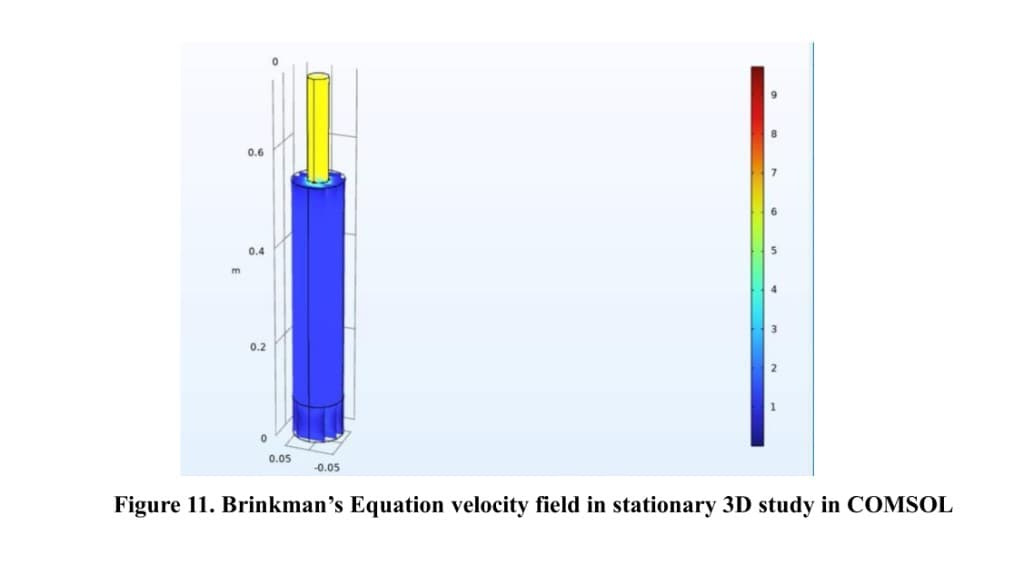
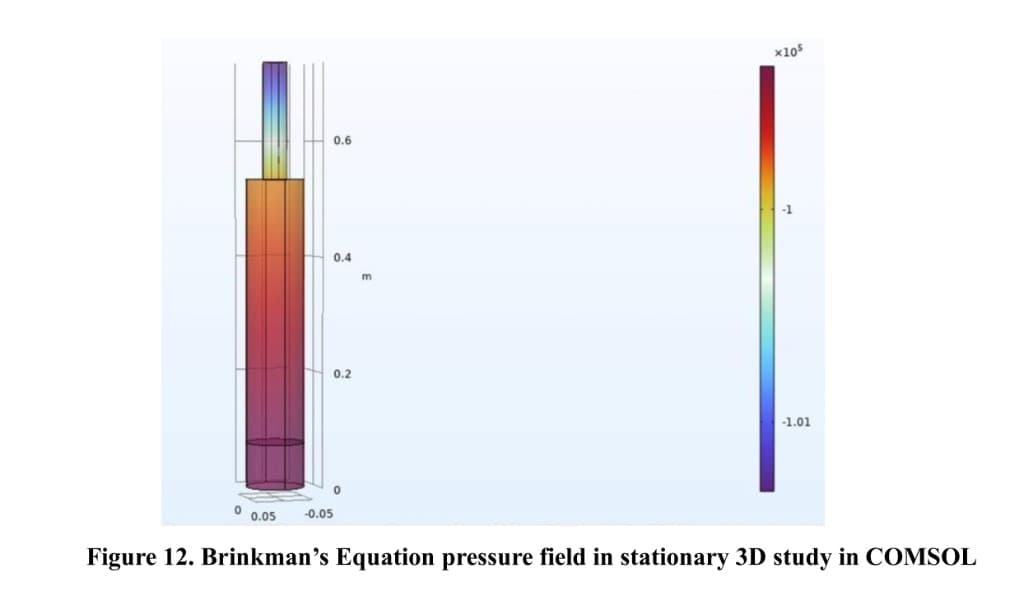
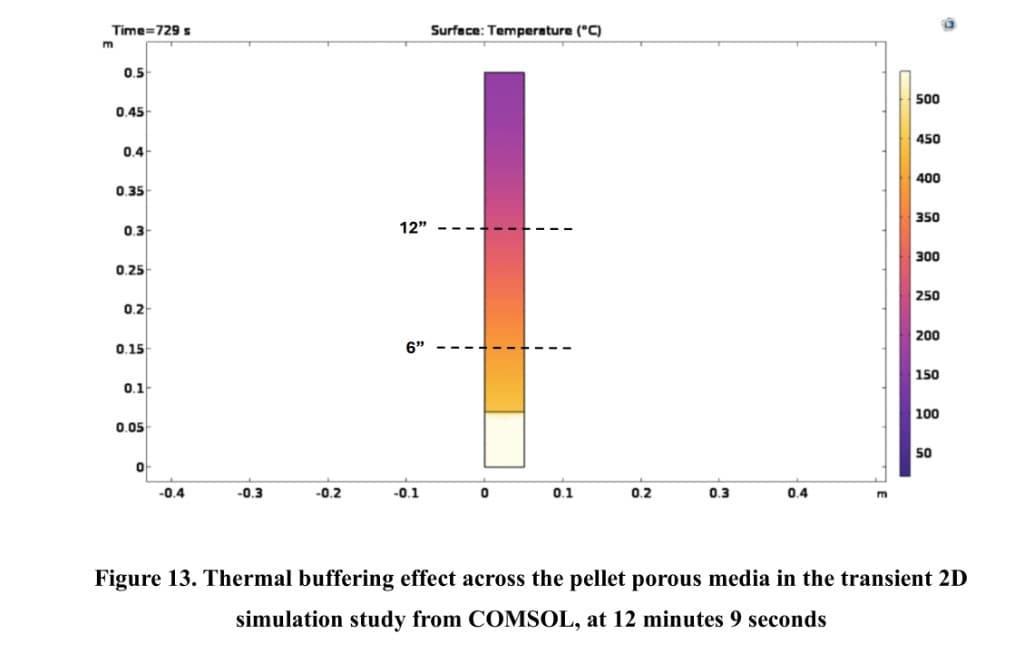
I led the development of high-fidelity COMSOL multiphysics simulations to evaluate reactor scalability to 100 kW. The simulations modeled the charging cycle using Brinkman's equations to characterize velocity profiles and pressure drops across the porous pellet bed. Using porosity data provided by Cache Energy, I calculated permeability values and modeled heat transfer through the pellet medium, accounting for thermal buffering effects and flow dynamics. I developed both 2D transient and 3D stationary models, validating boundary conditions and solver convergence.
I also contributed to experimental testing by helping design the thermocouple array placement strategy, running charging and discharging cycles at multiple flow rates (10.3 CFM and 13.6 CFM), and collecting transient temperature data. This experimental data directly informed simulation parameter refinement and validated our computational models against real-world performance.
We successfully built a fully instrumented thermochemical reactor from 304 stainless steel (4" OD, 21" height, 0.12" wall thickness). Key features include a perforated wire mesh plate positioned 3" from the base to distribute airflow uniformly through the pellet bed, 5.5" of R-23 mineral wool insulation to minimize heat loss, and a modular flanged top for easy pellet loading and reactor height adjustments. A VFD-controlled 2 HP blower and 1 HP inline air heater deliver hot air at 500°C for charging, while a steam generator supports discharging. Sixteen K-type thermocouples integrated with a Raspberry Pi-based data acquisition system provide live temperature monitoring at five-second intervals across critical reactor locations (mixing chamber, 6" and 12" heights, outlet, insulation surfaces).
Tests were conducted at two flow rates (13.6 CFM and 10.3 CFM) demonstrated successful pellet dehydration, with internal temperatures reaching 400-475°C. Lower flow rates achieved significantly higher charging completion (50% vs. 14% at the reactor top) and improved lower-bound energy storage efficiency (6.63% vs. 2.11%), though at the cost of longer charging times (325 min vs. 275 min). Discharging cycles at 4.7 CFM steam flow produced peak temperatures of 500°C at the 6" height, with outlet temperatures exceeding 100°C, confirming exothermic hydration reactions throughout the pellet bed.
COMSOL multiphysics simulations successfully converged for both 2D transient and 3D stationary models. The 3D velocity field confirmed proper flow distribution—boundary conditions affected only the fluid domains while the porous pellet matrix maintained uniform streamlines. The 2D transient simulation showed pellet temperatures reaching steady-state (535°C) in approximately 60 minutes, capturing the thermal buffering effect caused by the heat capacity mismatch between air and pellet domains. However, simulations reached steady-state 76% faster than experiments due to idealized boundary conditions (perfect insulation, no reaction kinetics modeling).